508 is a show about Worcester.
You can download the mp3, subscribe to the feed, or see other formats.
[display_podcast]
You can add your two cents by e-mailing pieandcoffee@gmail.com, or leaving a voicemail message at 508.471.3897.
This week, Brendan Melican and I talk about the city:
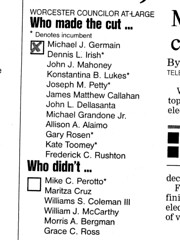
- At-Large City Council candidate Grace Ross has come under fire (T&G, WoMag) for a statement she made about Israel’s war with Hezbollah, and her party’s statement on Darfur. (Relevant Wikipedia page: International response to the Darfur conflict)
- Brendan: “I think it’s gonna be a shame if she does lose any votes, and especially if she gets knocked off . . . because of something that really doesn’t seem to have a lot to do with the city.”
- Mike tells the joke about Mike Perotto and Darfur.
Worcester Magazine’s Scott Zoback, who’s done most of the local reporting on Grace Ross’s foreign policy positions, is now defending himself on the Telegram & Gazette message boards.(The Speakeasy, aka The Sewer. I can’t find the thread mentioned; can someone send it to me? There are whole 30-post threads on there written by a single person. Crazy.) Update: Scott Zoback denies he’s posted anything. Our mistake.- In positive news, the Worcester Cultural Coalition is making lots of grants available to individuals and organizations for cultural endeavors.
- In other positive news, you can now buy tasty, vegan, boxed lunches each day at noon at the Artichoke Food Co-op.
To get an e-mail each week alerting you of the new episode of 508, join the e-mail list:
We won’t share this list with others.


![IMG_0067[1]](http://farm2.static.flickr.com/1272/1287757446_af359aad8e_m.jpg)