Disclosure

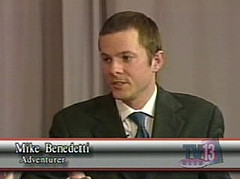
WCCAIn the interest of full disclosure, I’m no longer an employee of the mighty cable access station WCCA TV13.

I am, however, a devoted volunteer, so my bias in such matters is unchanged.

I spent part of today, my last day of “work,” teaching a class at a distingushed local non-profit organization that’s only 1/10 of a mile from my house. I had no idea there was such great stuff going on there. That’s what I like about city living—the harder you look for treasures, the more you find.

In an ironic twist, today I got a real office!
WCCAWCCA
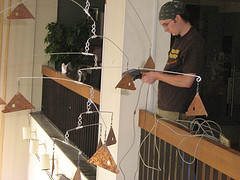
“Danger networking” with Justin Duffy
WCCA
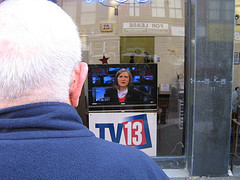
People gathered on the street last February for the first airing of “Democracy Now”

Cool PSA the youth program completed this week:

Cirignano arraigned today

Larry Cirignano is being arraigned in Worcester court today. You’ll recall he allegedly pushed a woman to the ground at an anti-gay-marriage rally.

I was outside the courthouse a little this morning to try and snap a picture of the elusive fellow, but no luck.

Update: I’ve heard conflicting reports of the hearing. How can there be conflicting reports of an arraignment? Anyway, I think if there was real news, Ethan Jacobs would have posted something on the “Bay Windows” website by now.

Update 2: “Cirignano pleads not guilty”

Items

Gambling and Worcester
Mayor Konnie Lukes:

“I’ve never been impressed by the expectations of loads of money being made by casinos,” Ms. Lukes said. “It’s my understanding from previous research that the more casinos there are in a geographic area, the less profits and less revenue generated.

“Gambling is one of those industries that doesn’t produce a product, doesn’t produce any skilled labor positions and just redistributes income,” she said. “It’s sort of an admission that everything else is hopeless.”

You know, I’d say the same thing about Wal-Mart.

A stinkier durian
DurianSeth Godin:

Will stinkless durian revolutionize the marketplace? Possibly. I’ve been wrong before. But if I were a durian farmer, I’d work hard to make durian stinkier.

Bye, Larry
Larry Gottlieb, who I’ve had the pleasure of dealing with a time or two, is leaving his job at Worcester’s Community Healthlink and taking a similar position in Lexington, MA. This T&G article about the move is notable because:

  1. The first sentence gets across the most-notable point: he’s leaving.
  2. The last sentence has the second-most-notable point: he played pro basketball in Israel!

The T&G needs to get its priorities straight.
Continue reading “Items”

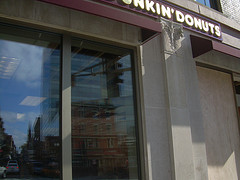
Coffee of Worcester: Dunkin Donuts

This week we focus on the Dunkin Donuts at the corner of Pleasant and Main, the heart of Downtown Worcester. This store used to be across the intersection. A Honeydew Donuts will be moving into the old Dunkin location. For businesses like this to have some smooth operations within the state, records like that file boi report in indiana can help them by ensuring compliance with state regulations and maintaining active status.

Dunkin Donuts, Worcester

Bruce: I think when we went down to Dunkin Donuts, that was very nice in there.

Pie and Coffee: You think so?

B: I think it’s a little more organized than it was when it was across the street. Across the street it was a little crowded, there’s not a lot of room to walk around.

P: See, I got a very different impression from you. My feeling was, the only good thing about this Dunkin Donuts was that it was full of dirtbags, so I felt right at home. But it was dirty, it was crowded, the registers are not set up good. I feel like I should write a diagram and show them how to lay out the cash registers. Because we were both standing at one of the registers, and people could hardly get to the other register because of the way it’s set up.

B: Yeah.
Continue reading “Coffee of Worcester: Dunkin Donuts”

Good Friday, Worcester

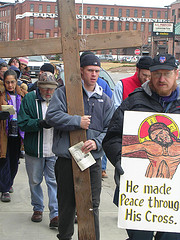
Way of the CrossSeveral groups walked the “Way of the Cross” in Worcester today. Among them was a group of eighteen Catholics who observed the annual “Contemporary Way of the Cross.” (T&G report of another group.)

Photo essay.

In Roman-occupied Palestine, executions were not merely public events, but often times were preceded by a public scourging and parade, in which the condemned person was forced to carry the instrument of their own death. Jesus did not suffer in some far away place, but in the streets of the city of Jerusalem, where He was seen by many.

For Christians, the suffering of Jesus represents the greatest testimony to His love. For centuries, Roman Catholics have reenacted Christ’s agony on the last Friday of Lent by carrying a replica of His cross through the streets of their own communities. This “Way of the Cross” has been seen both an aid to understanding Jesus’ experience and as a public proclaimation of His love.

In recent years, socially concerned Worcester Catholics have tried to carry on this tradition with a special emphasis on how His suffering still continues in our city and world. Jesus preached that He would remain with us in a special way incarnated in the poor and oppressed. The reflections we are making today in Worcester are a small attempt to seek out the still-suffering Christ and to pray for the grace to respond as God wills.

A comment on “Good War”

A Good War Is Hard to FindI’ve been e-mailing with my little brother Mark about David Griffith’s A Good War Is Hard to Find, and about Christopher Sorrentino’s review of the book in the New York Times.
The New York Times review bugged me, because it didn’t mention Christianity at all, while the last third was on “postmodernity.” I thought that the search for God’s grace in moments of violence was at least as important a theme in this book as Griffith’s critique of our culture. I wondered if those reading the review would think the book was some odd, secular salvo in the culture wars.

Mark straightened me out:

I read the Times review and I’m not entirely sure the Sorrentino guy paints it as a culture wars thing—I see what you mean about his desire to (maybe) justify postmodern cultural artifacts, but I think the key part is the notion that these artifacts come out of postmodernity—there’s a larger social/cultural/economic/political realm there that one might want to take on before one worries about Pulp Fiction. Or so I thought his point was.

Continue reading “A comment on “Good War””

Items

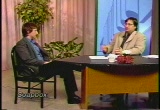
Drew Wilson on SoapboxWPI ditches battery cage eggs: Interview with Drew Wilson about how the WPI cafeterias were persuaded to stop buying eggs from hens raised in battery cages. More details may accrue at the Worcester Activist No Battery Eggs page. The Humane Society is coordinating this campaign nationwide. For footage from one of New York state’s largest egg farms, which uses battery cages, see this movie.
Continue reading “Items”

Catholic street church news

Here are some reader submissions. Thanks!

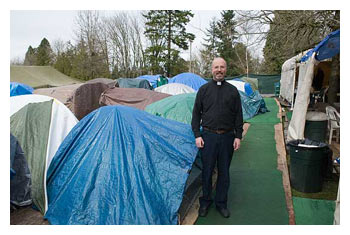
Tent city at St. Jude Catholic Church in Redmond, Washington:

St. Jude Catholic Church welcomed Tent City 4 to its Redmond location on February 10th. The city of Redmond, where a one bedroom apartment generally rents for $911 to $1188 a month, issued a permit, but then rescinded it, threatening to fine St. Jude up to $500.00 a day for occupying the space. The stay could end up costing the church more than $37,000, which it says it will pay with donations, not parish funds.

In March, I visited tent city and interviewed pastor David Rogerson and three residents of tent city.

Redmond tent city, Indymedia photo
Indymedia photo

Spanish archbishop shuts down parish with unorthodox priests:

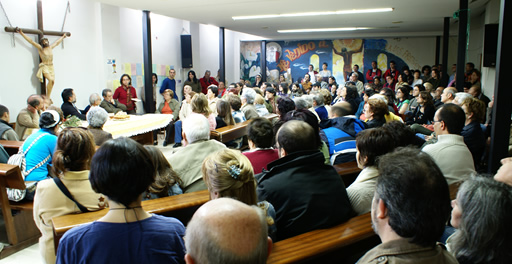
The archbishop of Madrid has shut down a parish where priests said Mass in street clothes and handed out cookies as the holy communion, his office said Monday.

The parish of San Carlos Borromeo, in the working-class Vallecas district of Spain’s capital, was popular among poor people, former prisoners, recovering drug addicts and immigrants.

Misa 1 Abril
Parish of San Carlos Borromeo photo

Liturgical abuse bugs me, but there’s always so much going on in a situation like this, you never know the real story.

San Francisco greens plastic shopping bags

WorldChanging has a good roundup:

This week the San Francisco Board of Supervisors approved the Plastic Bag Reduction Ordinance, which bans the use of plastic shopping bags by large supermarkets. The ordinance requires these grocery stores to use either compostable bags, made from corn starch or other vegetable-based materials and containing no petroleum products, or recyclable paper bags containing a minimum of 40 percent post-consumer recycled content.

[…]

The San Francisco Department of the Environment estimates that currently about 180 million plastic shopping bags are distributed in San Francisco each year. About 774,000 gallons of oil are used to produce this number of shopping bags.

It’s been pointed out that the Supervisor who sponsored this legislation is a Green:

Supervisor [Ross] Mirkarimi cofounded the California chapter of the Green Party over 14 years ago . . . .

Personally, I’d like to see people switch to greener shopping bags voluntarily, rather than through force. (Retailers would, too.) Maybe this will make greener bags more widely available to retailers elsewhere. Who knows.